Emerging Automation Trends in Corporate Environments for 2024
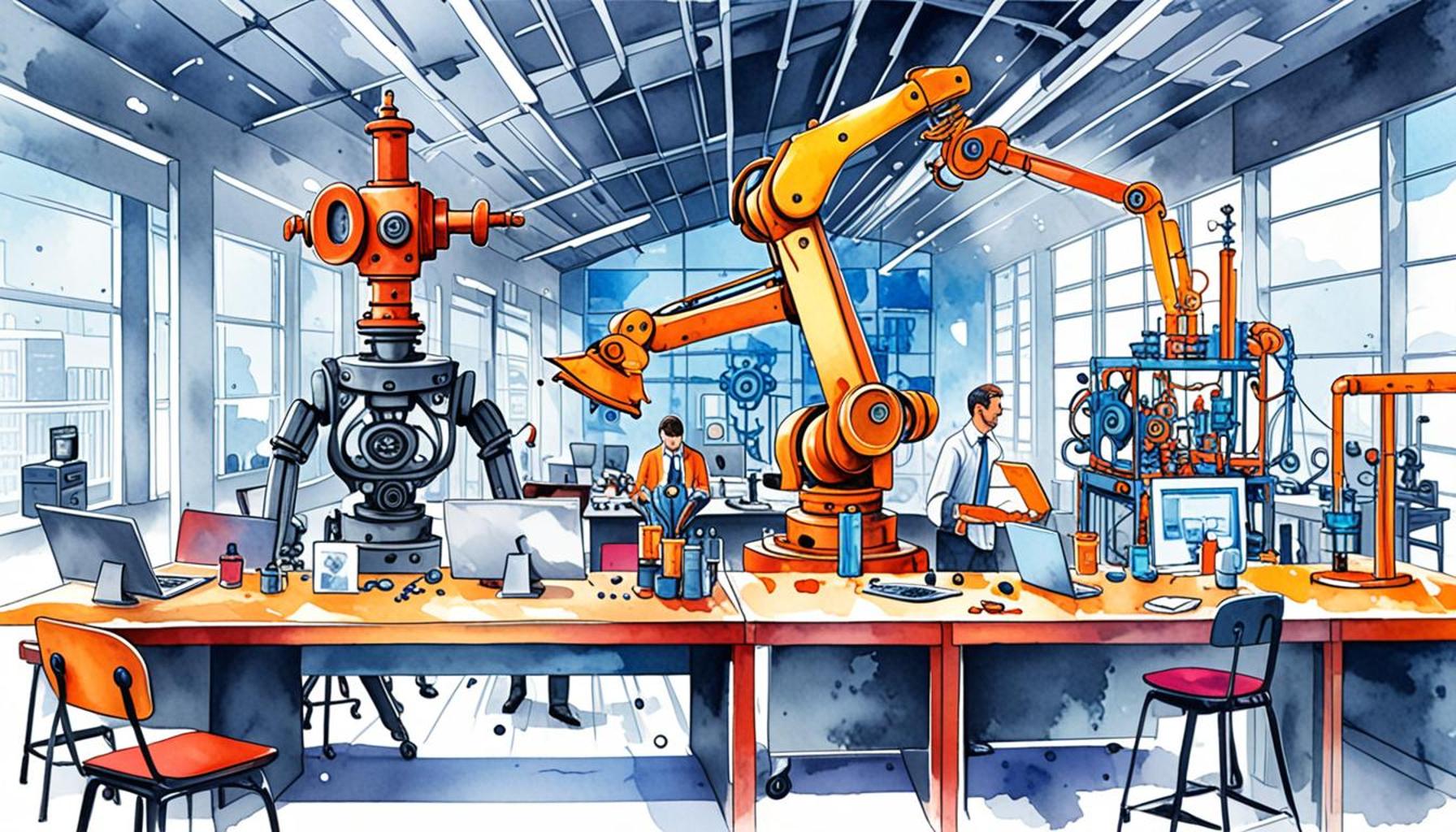
The Rapid Evolution of Automation in Business
The evolution of automation technologies is transforming corporate environments across the globe, particularly in the United States, where industries are embracing these advancements to enhance productivity and efficiency. As we move through 2024, organizations are expected to further integrate automation into their daily operations, fundamentally changing not only how business is conducted but also the nature of the workforce itself.
One of the leading forces in this transformation is Artificial Intelligence. Companies are increasingly utilizing AI tools, such as chatbots and predictive analytics, to improve decision-making processes and tailor customer experiences. For instance, businesses like Starbucks have implemented AI to analyze customer data, providing personalized recommendations and promotions, which has proven to enhance customer satisfaction and loyalty.
Another critical aspect of automation is Robotic Process Automation (RPA). Organizations are adopting RPA to automate mundane, repetitive tasks—such as data entry and invoice processing—freeing up employees to engage in more strategic activities. Deloitte’s 2023 report noted that companies implementing RPA saw a 30-50% increase in the speed of process completion, demonstrating the tangible benefits of this technology.
Additionally, the shift towards Cloud Computing is reshaping how businesses operate, especially post-pandemic. Cloud-based solutions like Microsoft Azure and Google Workspace facilitate remote work and collaboration, allowing teams to connect seamlessly regardless of geographical barriers. This transition not only promotes flexibility but also drives an increase in operational efficiency. A McKinsey study highlighted that companies utilizing cloud technologies can accelerate product delivery by up to 20%.
Moreover, Data Analytics is becoming increasingly crucial. As organizations collect vast amounts of data, leveraging this information to gain insights is vital for optimizing operations. Retail giants such as Amazon utilize data analytics to forecast demand accurately and streamline inventory management, which contributes to their competitive edge.
However, with these advancements come challenges that businesses must navigate. Balancing innovation with workforce adaptation is essential. Organizations must ensure that their employees are equipped with the necessary skills to work alongside new technologies. Investing in training programs and fostering a culture of continuous learning can help mitigate workforce displacement fears and enhance overall adaptability.
Understanding these implications is crucial for long-term success as we explore the automation trends shaping 2024 and beyond. The future lies not merely in implementing new technologies but in rethinking operational strategies within a constantly evolving digital economy. As automation becomes increasingly prevalent, the organizations that effectively harness these advancements will not only thrive but also set the standard for innovative business practices in the years ahead.
The Rise of AI-Driven Solutions
As we delve deeper into 2024, Artificial Intelligence (AI) continues to redefine the landscape of corporate automation. This technology is not just improving existing processes but also creating entirely new business models. The implementation of AI-driven solutions allows companies to analyze large datasets at unprecedented speeds, enabling rapid responses to market changes. Major players in various sectors are capitalizing on AI capabilities, particularly in areas like customer service, where AI chatbots can handle a plethora of inquiries simultaneously, enhancing efficiency and customer experience.
In the corporate world, organizations are increasingly looking to implement AI-based analytics tools, thereby shifting from reactive to proactive strategies. By leveraging these tools, companies can anticipate trends and adjust their strategies accordingly, reducing the risk of missed opportunities. For example, Netflix utilizes AI algorithms for content recommendations, resulting in higher viewer retention rates and improved user satisfaction.
Integrating Advanced Robotic Process Automation
The adoption of Robotic Process Automation (RPA) is rapidly accelerating as organizations seek to reduce operational costs and improve service delivery. RPA automates rule-based processes, providing significant time savings and efficiency gains. A study from the Institute for Robotic Process Automation and Artificial Intelligence indicated that RPA could lead to a 50% reduction in operational costs and a 30% improvement in compliance accuracy.
Organizations are finding various applications for RPA, including:
- Financial Services: Automating reconciliation and reporting tasks.
- Human Resources: Streamlining employee onboarding processes.
- Supply Chain Management: Enhancing order processing efficiency.
These applications underline how RPA is transforming traditional business models into more agile operations. Furthermore, as these tools evolve, they are becoming increasingly capable of handling more complex tasks, leading to further enhancements in productivity.
The Cloud Revolution’s Impact on Businesses
Cloud computing is another dominant force driving automation in corporate environments. The transition to the cloud enables organizations to deploy automated solutions rapidly and at scale. With platforms like Amazon Web Services (AWS) and Salesforce, companies are not just moving their data storage to the cloud; they are integrating entire workflows, improving collaboration among remote teams and maintaining business continuity.
As companies increasingly embrace digital transformation, the shift to cloud-based solutions is proving indispensable. According to a report by Gartner, businesses adopting cloud technology will experience a 45% increase in operational performance, underscoring the significance of cloud automation in achieving organizational objectives.
Data-Driven Automation: A Necessity for Growth
In the era of digital transformation, successful businesses are harnessing data analytics to drive automation initiatives. Data is a critical asset, and organizations now recognize the immense value of transforming this data into actionable insights. By employing machine learning and data analytics techniques, businesses can enhance their decision-making processes significantly.
From predictive maintenance in manufacturing to personalized marketing strategies in retail, the potential applications are vast. Companies like Walmart are already leveraging data analytics to optimize inventory management, ensuring that products are always available while reducing excess stock.
Overall, the convergence of AI, RPA, cloud computing, and data analytics is charting a comprehensive path toward automation in corporate environments in 2024. Understanding these trends and their implications will be crucial for companies looking to innovate and thrive in an evolving marketplace.
| Category | Advantages |
|---|---|
| AI-Powered Analytics | Enhanced decision-making through real-time data analysis, driving efficiency. |
| Robotic Process Automation (RPA) | Cost reduction by automating repetitive tasks, allowing employees to focus on strategic initiatives. |
| IoT Integration | Better resource management through connected devices that provide insights on asset performance. |
| Cloud Automation | Scalability and flexibility in managing workloads, making it easier for businesses to adapt to market changes. |
As we progress into 2024, automation trends in corporate environments are becoming increasingly transformative. One significant trend is **AI-Powered Analytics**, which enhances decision-making through real-time data analysis, fostering greater efficiency across processes. With the right tools, organizations can effectively leverage their data for strategic advantages.Another notable trend is the implementation of **Robotic Process Automation (RPA)**, which is set to reduce costs significantly. By automating repetitive tasks, RPA allows employees to redirect their efforts toward more strategic initiatives, thereby increasing overall productivity.The integration of **IoT** is reshaping resource management within companies. By connecting various devices, businesses gain valuable insights into asset performance, enabling proactive maintenance and improved operational efficiency.Lastly, **Cloud Automation** brings unmatched flexibility and scalability, allowing organizations to seamlessly manage their workloads. This trend not only enhances adaptability but also positions businesses favorably in the fast-paced corporate landscape of 2024. These emerging automation trends indicate a shift toward a more dynamic and efficient future for corporate environments.
The Adoption of Edge Computing in Automation
As businesses seek to enhance their operational efficiency, the integration of Edge Computing is emerging as a game-changer in corporate automation strategies. This technology brings computation and data storage closer to the location where it is needed, reducing latency and improving response times. This capability is especially crucial for industries requiring real-time data processing, such as logistics and manufacturing.
For instance, IoT devices deployed at manufacturing plants can now collect vast amounts of data and process it locally, enabling immediate insights and faster decision-making. A report by McKinsey predicts that the adoption of edge computing in manufacturing could lead to cost reductions of up to 20% and substantial improvements in productivity when paired with automation technologies.
Furthermore, the rise of IoT and connected devices is driving the need for edge analytics. Companies can swiftly analyze operational data at the source, leading to actionable insights without overwhelming central servers. This transition not only strengthens data security but also ensures that businesses remain competitive in a technology-driven marketplace.
Seamless Integration of AI and RPA
In 2024, we are witnessing a profound synergy between AI and Robotic Process Automation (RPA) creating advanced automation solutions that tackle more intricate tasks. While RPA excels in automating repetitive workflows, integrating AI enhances its capabilities. For example, AI can provide RPA bots with cognitive abilities to perform decision-making processes, such as interpreting unstructured data or adjusting workflows in real time.
The combination results in what is often referred to as Intelligent Automation, as seen in financial services where AI algorithms analyze complex datasets to detect anomalies while RPA executes compliance checks and reporting. This integration not only streamlines processes but also reduces human error and increases reliability across various sectors.
The Role of Digital Twins in Automation
Digital Twins, virtual representations of physical assets or systems, are becoming instrumental in optimizing processes and operational decision-making. By simulating the real-world performance of a product or system, organizations can conduct “what-if” analyses without the financial risks associated with physical trials.
Incorporating digital twins into corporate automation can improve maintenance schedules, drive efficiencies, and facilitate descaling of production lines. For instance, GE uses digital twins in their jet engine manufacturing processes to optimize performance and predict failures ahead of time, leading to reduced downtime and cost efficiency.
Focus on Cybersecurity Automation
With the increasing integration of automation technologies, corporate cybersecurity is more important than ever. As organizations accelerate their digital transformation journeys, threats evolve, making the need for cybersecurity automation imperative. Security Operations Centers (SOCs) are increasingly leveraging automated tools to detect, respond, and recover from cyber threats.
Data from the Ponemon Institute indicates that companies adopting automated cybersecurity measures can reduce their average breach response time by over 60%. Automated security solutions can analyze network traffic in real time, identifying anomalies that indicate potential threats. Automation in this domain not only strengthens defense mechanisms but also alleviates the burden on human security teams, allowing them to focus on more strategic initiatives.
Overall, with rapid technological advancements and an ever-evolving business landscape, the trends in automation are expected to become deeply ingrained in corporate environments. Companies that harness these trends effectively will be well-positioned to thrive in 2024 and beyond, gaining a competitive edge in their respective markets.
Conclusion: Embracing the Future of Corporate Automation
The landscape of corporate environments is undergoing a significant transformation, driven largely by the emerging automation trends anticipated for 2024. As we have explored, the integration of technologies such as Edge Computing, AI combined with RPA, Digital Twins, and cybersecurity automation are reshaping how companies operate and compete.
Organizations that leverage Edge Computing are finding ways to enhance data processing capabilities while minimizing latency, leading to operational efficiencies that are vital in today’s fast-paced market. The merging of AI and RPA is paving the way for Intelligent Automation, enabling systems to not only execute tasks but also learn and adapt in real-time. Meanwhile, the use of Digital Twins is revolutionizing maintenance and decision-making processes, offering businesses a risk-averse method to optimize their operations. Additionally, as threats become more sophisticated, the role of cybersecurity automation has become indispensable for safeguarding valuable corporate assets.
As we move into 2024, companies that proactively embrace these automation trends will not only streamline their processes but also position themselves to thrive in an increasingly competitive environment. By prioritizing innovation and adaptability, firms can unlock new levels of productivity, reduce costs, and ultimately deliver greater value to their stakeholders. This ongoing journey into automation presents an exciting frontier, where the possibilities are as vast as the technologies themselves.
In conclusion, the future of automation in corporate settings holds immense promise; thus, organizations must remain vigilant and embrace these trends to maintain their competitive edge. As we look ahead, continual learning and adaptation will be the keys to success in this rapidly evolving domain.
Related posts:
Quantum Computing The Next Technological Revolution Explained
Shein Reviews Tips to Identify Genuine Buyer Feedback Effectively
Blockchain Technology in Shein's Supply Chain: Enhancing Transparency and Trust
Augmented Reality Driving Force Behind Digital Innovation
Top Technology Trends for 2025 Future-Proof Innovations Explained
AIs Role in Personalizing Digital Experiences A Deep Dive